
 تولیدی
 وارداتی
 Top Products
 فارسی
فارسیTesting Method for Antistatic Agents in the Textile Industry
Eliminating static electricity in fabric
In textile manufacturing processes—particularly with synthetic fibers such as polyester—the phenomenon of static electricity can pose significant challenges. This electrical charge, which often arises from friction and continuous contact between fibers or with machinery components during weaving, dyeing, and finishing, leads to an accumulation of electric charges on the fabric surface.
Antistatic materials are used to combat this phenomenon and effectively neutralize static electric charges. By increasing the electrical conductivity of the fiber surfaces, these materials facilitate the easier discharge of static charges, thereby significantly contributing to improved manufacturing process efficiency and enhanced final product quality.
Objective: To measure the strength of the antistatic agent.
Required materials and equipment:
- Sample of polyester fabric
- Antistatic agent
- Tera-ohmmeter
- Laboratory oven
- Stopwatch
Test procedure
- Fabric sample preparation: First, pad the fabric sample using the padding method—following the antistatic agent dosage specified in the product brochure—and then dry it in an oven.
- Test Procedure: Using an ultra-high resistance meter, discharge any static electricity from the anti-static fabric using a discharge rod; then, place the ring electrode on the fabric and record the electrical resistance value from the device over a period of one minute. The recorded values are in giga-ohms.
Conclusion: The lower the electrical resistance value recorded by the device, the more favorable the antistatic property of the material in question.
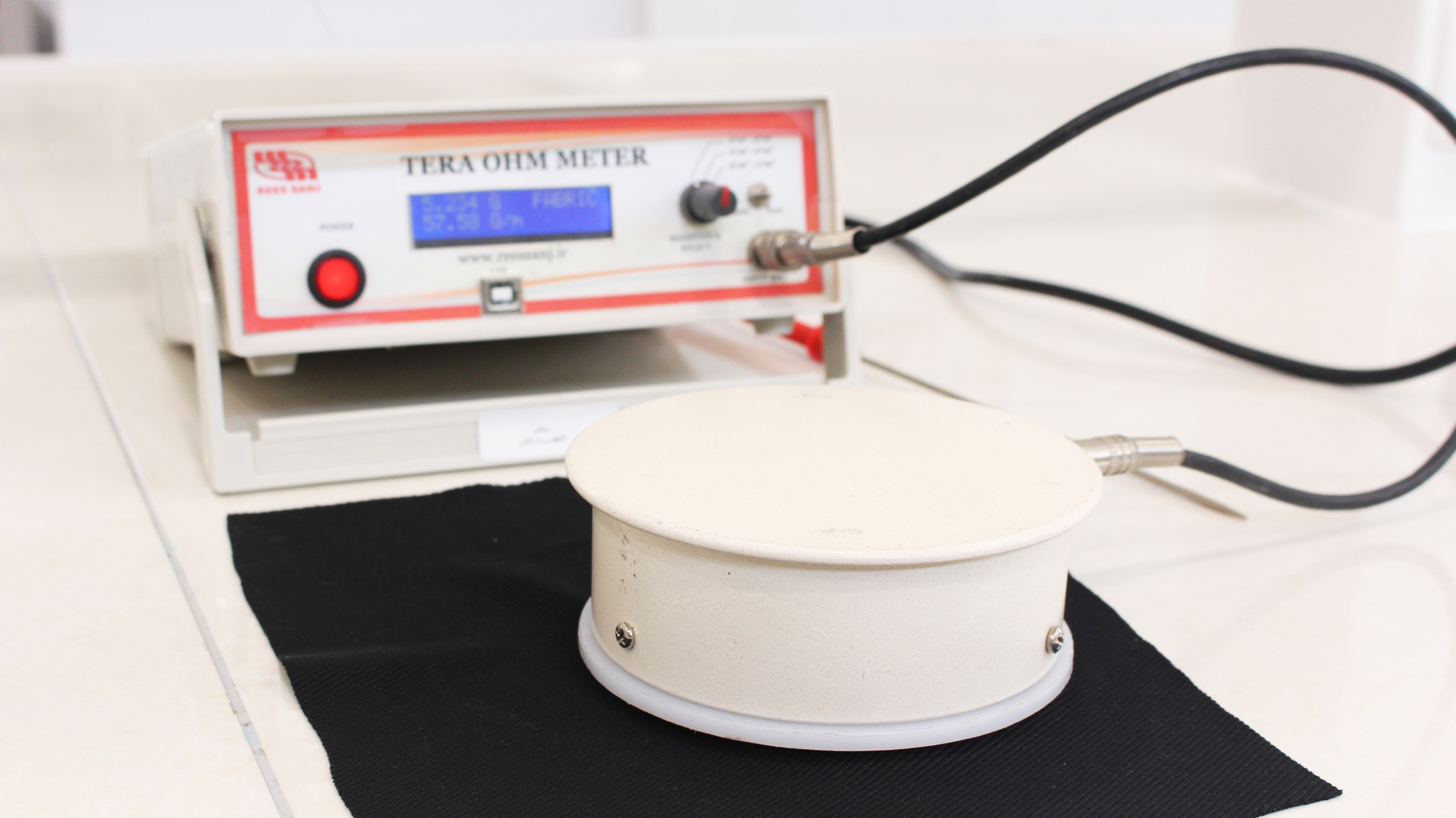
Tera-ohmmeter for anti-static testing
Concluding Remarks
We are here to facilitate the quality control process and ensure the optimized performance of dispersing agents by providing the necessary technical guidance.
Familiarity with these standard methods enables you to make informed choices when sourcing raw materials and ensures the desired quality of your final products.