
 تولیدی
 وارداتی
 Top Products
 فارسی
فارسیWater Analysis in the Textile Industry: Water Hardness Test
Why is water analysis vital in industries?
Water hardness is a common phenomenon largely influenced by the chemical composition of the geographical area; water flowing through limestone and magnesium-rich regions exhibits greater hardness than water from granitic or sandy areas. This level of hardness also fluctuates throughout the year, being lower during rainy seasons and higher during dry seasons.
Water hardness is significant not only for industrial processes—particularly in the textile industry—but also for public health. It adversely affects sensitive textile operations such as scouring, bleaching, dyeing, printing, and desizing. These effects can lead to reduced final product quality, increased consumption of chemicals and energy, and environmental issues. Therefore, precise analysis of process water and an assessment of the types of hardness present are crucial for selecting and implementing appropriate water softening solutions.
Objective: Measuring and controlling the hardness of water used in the textile production line.
The primary objective of this test is to accurately measure the various types of water hardness in textile industry production lines using standard titration methods. This measurement enables us to evaluate the impact of the water on different production processes and, if necessary, implement corrective measures, such as the use of water-softening agents.
Standard methods for water hardness analysis
Types of titration methods for water analysis
- EDTA titration method for calcium (Ca-3500), iron (Fe-3500), and magnesium (Mg-3500) ions.
- EDTA Titration Method for Total Hardness (2340 Hardness EDTA Titrimetric)
- Phenanthroline method
In this test, the primary focus will be on measuring calcium hardness, magnesium hardness, and total hardness. If the water sample contains iron, its concentration will also be measured and reported using an appropriate method.
Required materials and equipment:
- Sample of water for consumption
- 0.01 M disodium EDTA dihydrate solution
- Ammonium buffer solution
- Eriochrome Black T indicator
- Murexide indicator
- 1 N Sodium Hydroxide (NaOH) solution
- Distilled water
- Ammonium chloride (NH4Cl)
- Ammonium hydroxide (NH₄OH)
- Magnesium sulfate (MgSO4)
- Burette
- Volumetric Flask
- Pipette
- Laboratory balance
- Erlenmeyer flask
Important points regarding the preparation of solutions
- Preparation of 1 N sodium hydroxide solution: Dissolve 40 g of sodium hydroxide (NaOH) in 1000 mL of distilled water
- Preparation of 0.01 M EDTA solution: Dissolve 3.72 g of EDTA dihydrate salt in 1000 mL of distilled water.
Test procedure
a) Method for measuring calcium hardness in water
-
- Sample preparation: Pour 25 mL of the water sample into an Erlenmeyer flask.
- pH Adjustment 2: Add 1 N sodium hydroxide (NaOH) solution to the Erlenmeyer flask until the sample pH is adjusted to the range of 13 to 14.
- Adding the indicator: Add a small amount of Murexide indicator to the Erlenmeyer flask. The initial color will typically be pink or red.
- Titration: Pour the 0.01 M EDTA solution into the burette and titrate against the sample solution in the Erlenmeyer flask.
- End point: Continue the titration until the color changes from pink/red to purple. This color change indicates that the titration end point has been reached and the complexation of Ca²⁺ ions with EDTA is complete. Record the volume of EDTA used.
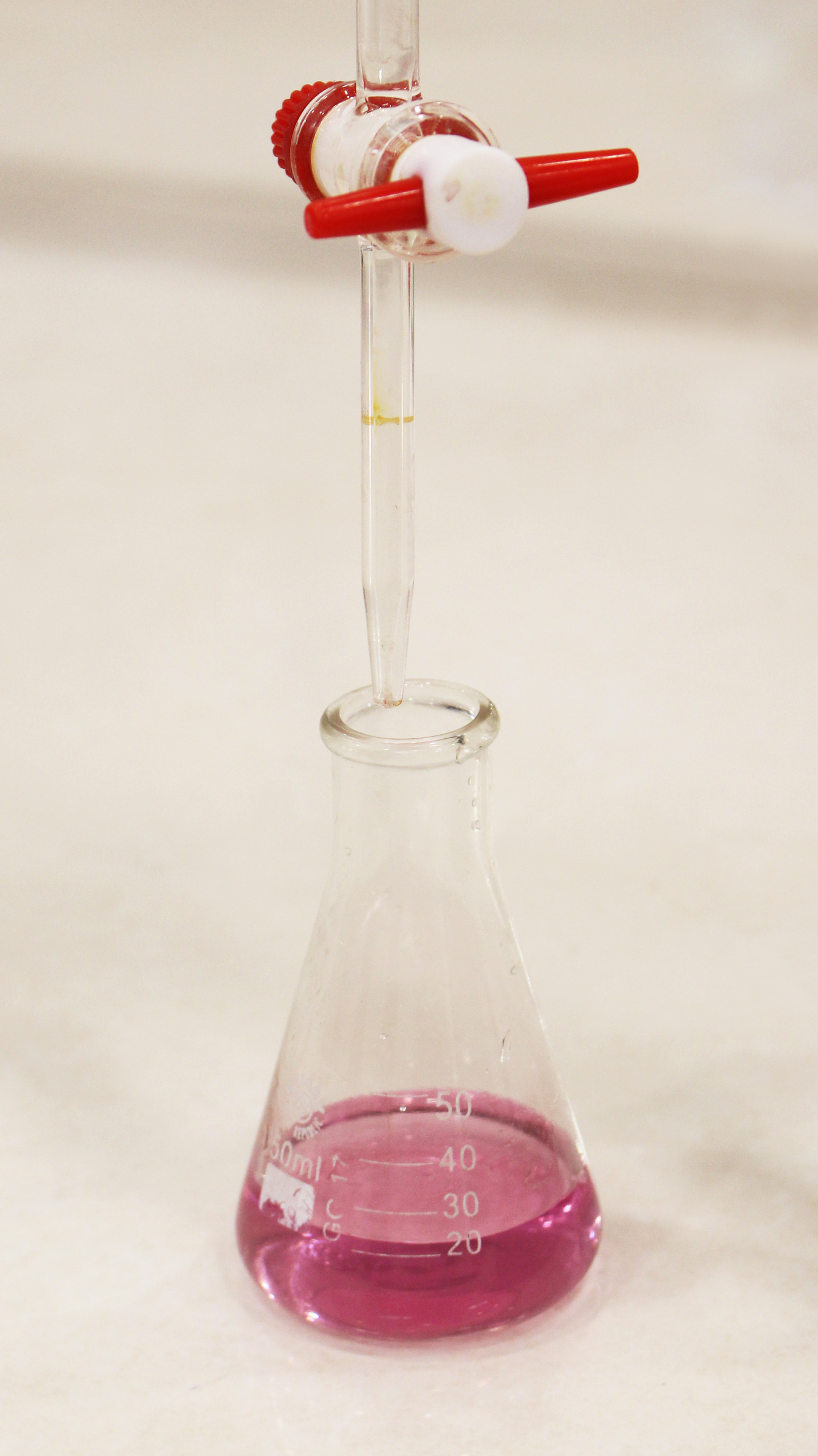
Color of the solution before titration
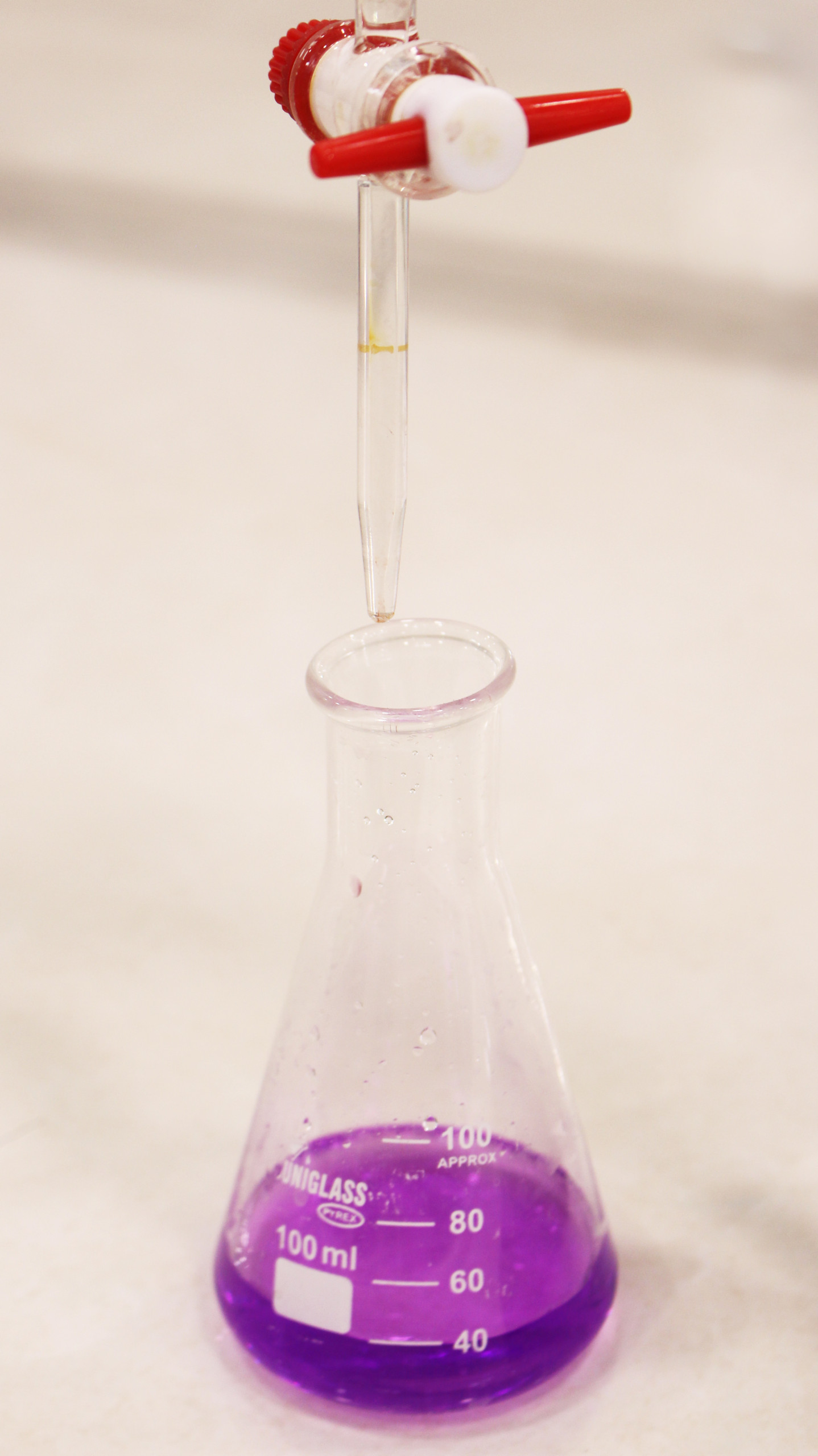
Color of the solution after titration
Ultimately, the calcium hardness of the water is determined using the relevant calculation formula. 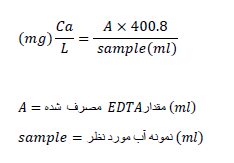
b) Method for measuring total water hardness:
- Sample preparation: Pour 25 mL of the water sample into an Erlenmeyer flask
- pH Adjustment 1: Add ammonium buffer solution to the Erlenmeyer flask until the sample pH is adjusted to the range of 10 to 11.
- Adding the indicator: Add a small amount of Eriochrome Black T indicator to the Erlenmeyer flask. The initial color will typically be pink or red.
- Titration: Pour the 0.01 M EDTA solution into the burette and titrate against the sample solution in the Erlenmeyer flask.
End point: Continue the titration until the color changes from pink to blue. This color change indicates that the titration end point has been reached. Finally, record the volume of EDTA used.
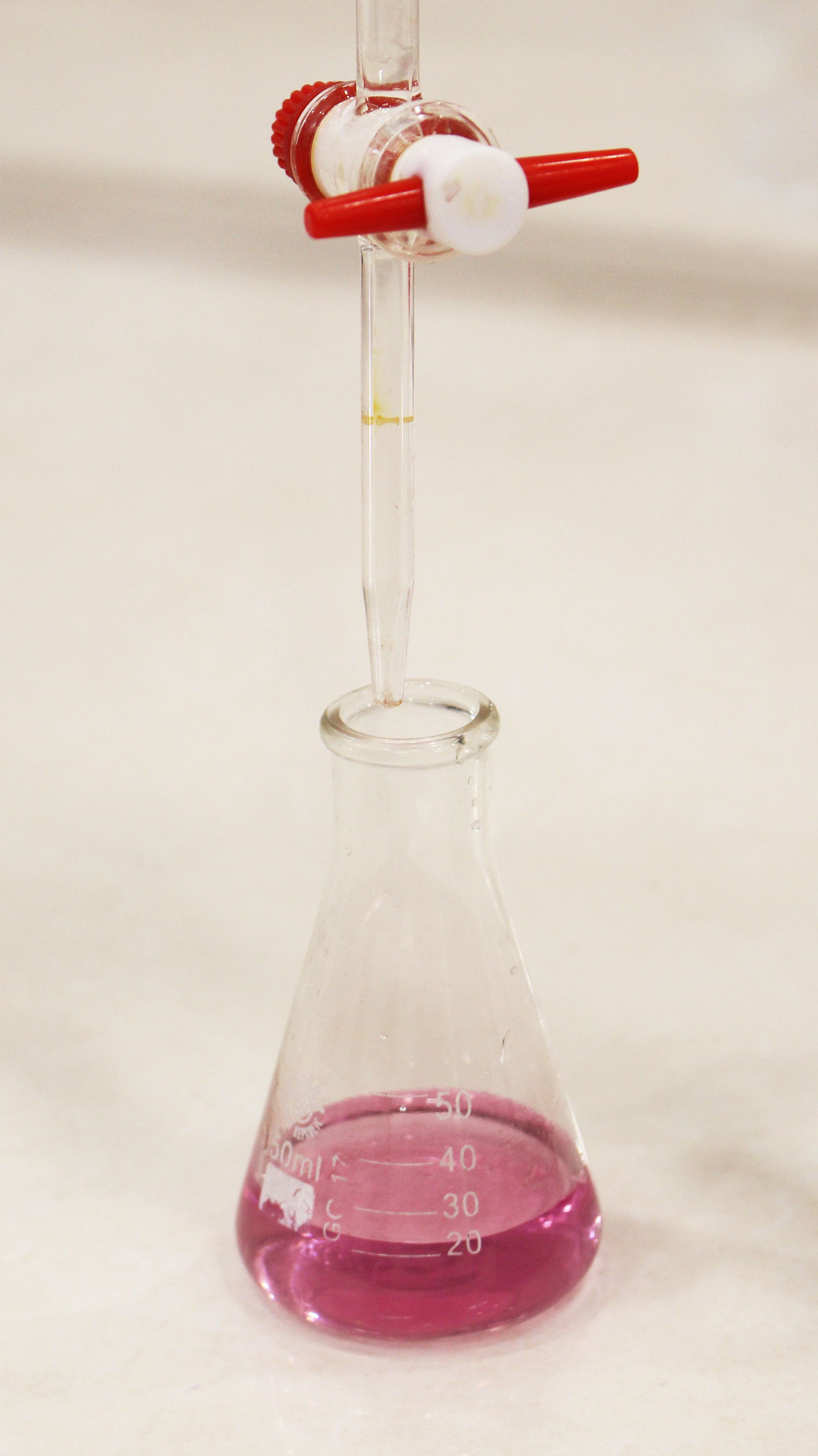
Color of the solution before titration
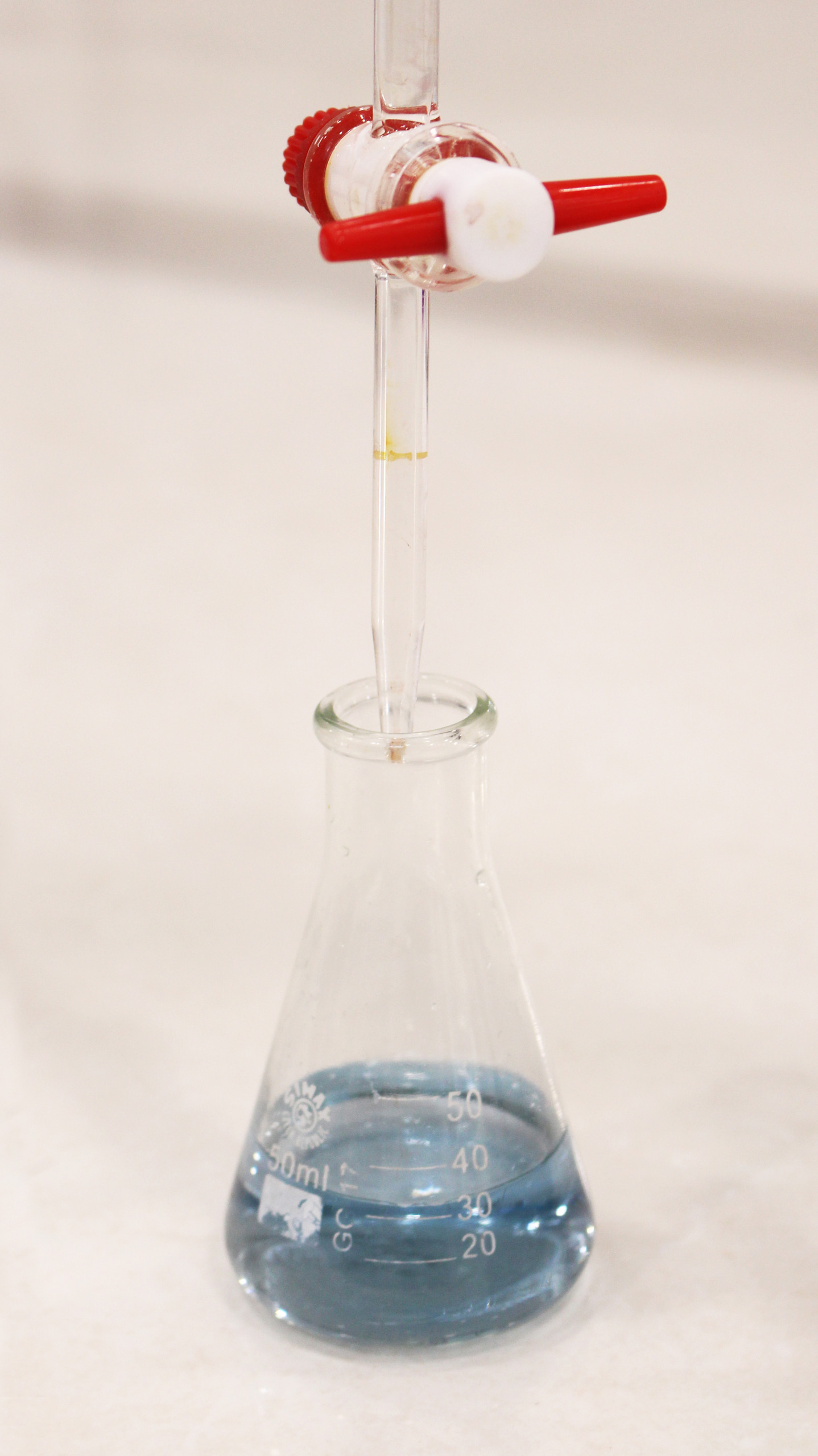
Color of the solution after titration
Ultimately, the total hardness of the water was determined using the relevant calculation formula. 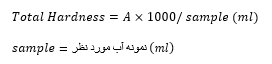
Important note:
If you are unable to obtain the necessary materials, you can use a total water hardness test kit instead of the titration method.
Preparation of solutions:
- Preparation of 1 N sodium hydroxide solution: Dissolve 40 g of sodium hydroxide (NaOH) in 1000 mL of distilled water
- Preparation of 0.01 M EDTA solution: Dissolve 3.72 g of EDTA dihydrate salt in 1000 mL of distilled water.
- Preparation of ammonium buffer: Combine 9.16 g of ammonium chloride (NH4Cl) with 143 mL of ammonium hydroxide (NH4OH) and 1.25 g of magnesium-EDTA salt. If magnesium-EDTA salt is unavailable, dissolve 1.179 g of EDTA (disodium salt dihydrate) and 0.78 g of magnesium sulfate (MgSO4·7H2O) in 50 mL of distilled water, then dilute to a final volume of 250 mL with distilled water in a volumetric flask. The prepared buffer solution is stable for use for up to one month.
c) Method for measuring the hardness of magnesium in water:
Magnesium hardness is also calculated using the following formula.
d) Method for measuring the iron content of water:
Titration can be used to measure iron content; however, due to the presence of toxic and hazardous reagents involved in this method, we recommend using an iron measurement kit instead.
In this test, results are reported using a colorimetric method; specifically, if the color of the water sample changes from colorless to red-orange or brick-red, it indicates the presence of iron ions in the water.
Conclusion and Application in the Textile Industry:
Accurate control of water hardness in the textile industry is essential to ensure the quality of the pretreatment, dyeing, finishing and other finishing processes. High hardness can lead to:
- Reduced efficiency of the firing stage and increased material consumption.
- Decomposition of hydrogen peroxide during bleaching and damage to fibers.
- Sedimentation, unevenness, and shade variation in the dyeing process.
- Negative impact on various aspects of color and fabric stability.
- Reduction in print quality due to a change in the viscosity of the printing paste.
And… it becomes.
If you need to assess the water hardness in your textile production line or are looking to select the best water-softening agent for your production conditions, our experts are ready to provide professional advice. “Request Consultation”
Do not forget that by performing this test regularly, reviewing the results, selecting optimal water-softening agents, and employing appropriate water treatment methods, you can prevent these issues and guarantee the quality of your products.
References
- Peykari, M., & Karbasian, A. (2015). Water Tests. Tehran: Arkan-e Danesh Publications.
- Rice, E. W., Baird, R. B., & Eaton, A. D. (2017). Standard Methods for the Examination of Water and Wastewater. APHA.
https://www.environmentalexpress.com/ee/s/product/detail/01t4W00000FjUfaQAF